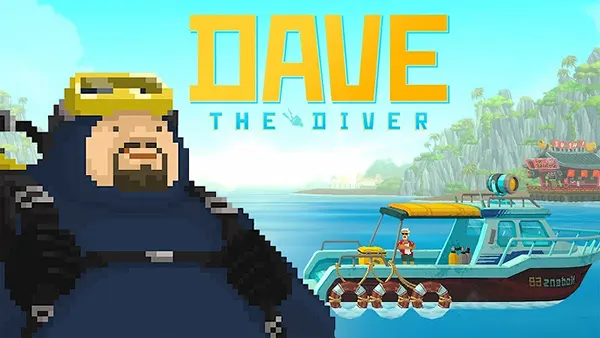



Dave the Diver is a particularly interesting case for mobile gaming because its structure already sits somewhere between a long adventure and a collection of manageable daily activities. The 2026 mobile edition keeps the core PC experience rather than replacing it with a simplified spin-off, but its controls and interface have been reconsidered for phones and tablets. Touch controls, adjustable on-screen buttons, clearer presentation on smaller displays and motion-based actions help reduce the effort required to start playing away from a desk or television. These changes do not turn Dave the Diver into a five-minute casual game, nor do they shorten its story. Instead, they make individual dives, restaurant shifts and management tasks easier to fit around shorter periods of free time.
What Changes When Dave the Diver Moves to Android and iOS
The most important point about Dave the Diver on mobile is that it remains the original game at heart. MINTROCKET describes the international mobile edition as a full port of the PC game, retaining the mixture of underwater exploration, fishing, equipment upgrades, story events and evening work at Bancho Sushi. That matters because mobile adaptations of larger games sometimes remove systems or rebuild progression around much shorter stages. Dave the Diver takes a different route. Its existing progression remains central, while the mobile work is concentrated mainly on how players see and control that content on a smaller touchscreen.
The earlier Chinese mobile release provides a useful picture of how this adaptation works in practice. Controls were redesigned around virtual sticks and touch buttons, with players able to alter the position and size of important inputs. The developers also worked on visibility because fish, objects and interactive elements that are comfortable to identify on a monitor can become comparatively small on a phone. Mobile-specific viewing-distance options and adjustments to the apparent size of some game assets were introduced to make underwater information easier to read without fundamentally changing the visual identity of the Blue Hole.
These changes have a direct effect on short sessions even though they do not alter the length of the main campaign. A player who has ten or twenty minutes available does not need to connect a controller or become comfortable with a fixed collection of tiny virtual buttons before doing something useful. A customised control layout can leave frequently used actions within easy reach, while clearer underwater objects reduce the time spent fighting the screen rather than making decisions. The result is less friction between opening the game and continuing a task that was already in progress.
How the Gyroscope Is Used Without Taking Over the Controls
The gyroscope is one of the more distinctive additions, but its role should not be exaggerated. In the tested and released Chinese mobile adaptation, motion input has been used for activities such as pouring tea in the sushi restaurant. Tilting the phone can control the pouring movement, turning an interaction that originally depended on conventional controls into something that makes direct use of the device in the player’s hands. Harpoon aiming, meanwhile, has been adapted around touchscreen controls rather than making every important action depend on physical movement of the phone.
There is also a practical reason not to force gyroscope input on everyone. Motion controls can feel natural while sitting at home, yet they are less convenient when playing on a train, standing on public transport or holding a tablet at an awkward angle. During development of the Chinese edition, the team accounted for devices without a suitable gyroscope and provided conventional control methods for the same type of action. This is more useful than treating motion input as a mandatory feature: the gyroscope can add tactile character when circumstances allow, while ordinary touch controls remain available when movement would be inconvenient.
For short sessions, this approach works because the motion feature is attached to individual interactions rather than the entire control scheme. Players do not need to relearn how Dave moves through the Blue Hole every time they change their surroundings. The familiar virtual controls handle exploration and most actions, while selected moments can use the phone’s sensors. That gives the mobile edition its own character without making it dependent on gestures that could become tiring over a longer session or impractical during a brief journey.
Why Dave the Diver Already Suits Short Periods of Play
Dave the Diver did not need to be rebuilt around short sessions because its original daily rhythm already creates natural divisions. Daytime is largely associated with exploring the Blue Hole, collecting fish and resources, dealing with missions and preparing ingredients. Evening moves the focus to Bancho Sushi, where catches become menu items and restaurant management affects future upgrades. Each side feeds the other: diving supplies ingredients and resources, while restaurant income supports better equipment. This means a player can often approach a session with one understandable objective rather than having to complete a large chapter before feeling that progress has been made.
A single dive is especially suitable for this style of play because it has its own risk-and-reward structure. Oxygen limits how casually Dave can remain underwater, carrying too much equipment and fish affects movement, and deeper exploration can expose him to more dangerous creatures. The player therefore makes repeated decisions about whether to continue searching or return with the current catch. Even without any mobile-specific shortening of the game, this creates useful stopping points. Returning to the boat after a productive run can feel like completing a meaningful unit of play rather than abandoning an activity halfway through.
That does not mean every part of Dave the Diver works as a five-minute distraction. Story sequences, boss encounters, unfamiliar areas and some mission chains naturally demand more attention. Later dives can also become longer when the player is deliberately exploring deeper areas or looking for particular resources. The mobile edition is better understood as making flexible play easier, rather than transforming the entire adventure into a collection of miniature levels. Someone with more time can still spend a long evening exploring, while shorter periods can be used for targeted objectives.
Touch Controls and Interface Changes Reduce Everyday Friction
Underwater movement illustrates how relatively small control decisions can matter. The mobile design uses virtual movement and aiming controls together with dedicated action buttons, but the layout can be adjusted instead of forcing every hand size and screen size into one arrangement. The Chinese adaptation also integrated faster swimming into the movement control: pushing the virtual stick towards its outer range can trigger accelerated movement. Combining related actions in this way avoids filling the display with another permanent button and makes movement easier to manage with the thumb.
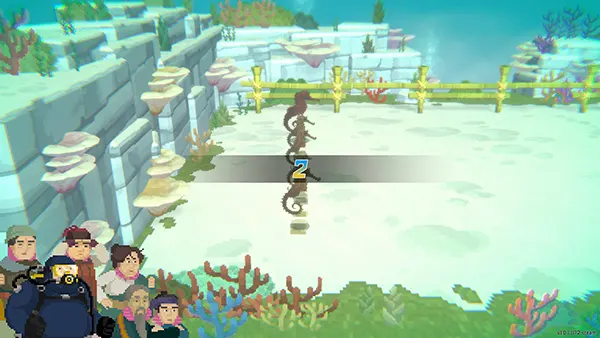
Readability is just as important as the controls themselves. Dave the Diver combines pixel-art characters and creatures with detailed three-dimensional environments, and underwater scenes can contain fish, hazards, items and environmental features at the same time. Simply shrinking the desktop image onto a phone would make some of these elements harder to identify. Mobile optimisation has therefore included work on viewing distance and the visual scale of relevant assets. Such changes are easy to overlook, but they matter during a ten-minute session because the player can spend that time choosing what to catch rather than repeatedly checking what is on the screen.
The same principle applies to menus and management. Dave regularly checks equipment, upgrades, staff, ingredients and other information outside active fishing. Touch input is naturally well suited to selecting visible interface elements, provided those elements are large enough and logically arranged. For a mobile version, improving these routine interactions can be more valuable than adding entirely new gameplay. A short session might involve checking available ingredients, preparing for the next dive or completing part of the restaurant routine, and those tasks become practical only when navigating the interface does not consume most of the available time.
What Android and iOS Players Should Know About the 2026 Mobile Version
The release history is important because Dave the Diver did not arrive everywhere on mobile at the same time. Its first commercial mobile release took place in China on 6 February 2026, following earlier testing of the adapted controls, interface and performance. MINTROCKET and its partners were therefore able to put the touchscreen version into players’ hands before the wider international launch. As of 18 August 2026, Apple’s international App Store listing gives 27 August 2026 as the expected release date for iPhone and iPad, while the official MINTROCKET Google Play listing is also live ahead of the global rollout.
The international store listings also clarify the commercial structure. The mobile edition can be downloaded so that players can try the opening portion, after which the complete game is unlocked through an in-app purchase. This is different from rebuilding progression around energy timers, repeated microtransactions or other systems commonly associated with free mobile games. The underlying product remains a single-player adventure with the original mixture of exploration and restaurant management. In practical terms, the introductory access gives players an opportunity to see how the touchscreen adaptation feels on their own device before deciding whether to unlock the complete game.
Players should also distinguish the base mobile port from every piece of additional Dave the Diver content released elsewhere. The description of the international mobile edition specifically presents it as a full port of the original PC game, but that wording should not automatically be interpreted as confirmation that every expansion or collaboration released for other versions will be included on the same date. Mobile compatibility for extra content can have its own development schedule. For anyone interested mainly in the core Blue Hole adventure and Bancho Sushi loop, however, the significant point is that the adaptation is intended to preserve the main experience rather than offer a reduced mobile-only variation.
How to Make Short Mobile Sessions More Productive
The easiest way to use Dave the Diver in short periods is to give each session a narrow purpose. A player with limited time might make one relatively shallow dive for ingredients, search for a specific resource, organise equipment before a later expedition or deal with restaurant preparation. Trying to combine deep exploration, several missions and extensive management into every session works against the natural advantages of playing on a phone. The game’s structure rewards gradual progress, so completing one useful task can be enough to move the wider cycle forward.
Control customisation is worth treating as part of that preparation. Buttons used constantly should sit where the player’s thumbs reach them comfortably, while less frequent actions do not need to occupy the most convenient areas of the display. The appropriate arrangement will differ between a compact phone and a large tablet. Motion input can also be used selectively. Gyroscope-based actions may be enjoyable when seated, while standard touch input is the more practical option during travel. Spending a little time adjusting these choices can make every later session quicker to start and easier to control.
Dave the Diver’s mobile adaptation works best because it does not confuse shorter access with a smaller game. The Blue Hole still encourages exploration, equipment still develops gradually, restaurant income still supports future diving and the story still unfolds over many hours. Mobile changes mainly remove obstacles that become noticeable when the same design is placed on a touchscreen: fixed button layouts, small visual targets and interactions originally designed around physical controls. Gyroscope features add a device-specific touch, while configurable controls and interface adjustments handle the more important everyday work. Together, they allow the same adventure to function comfortably during a long evening or a much shorter break without requiring the underlying game to become simpler.